
I Tested Fermaid O vs Fermaid K: My Experience and Which One Works Best

When I first started exploring the world of fermentation, I quickly realized that the quality of nutrients I added could make or break the entire process. That’s where Fermaid O or K came into play—a game-changer in providing essential nutrients to yeast during fermentation. Whether you’re a seasoned winemaker or a homebrewing enthusiast, understanding how to use these nutrient blends can elevate your craft to a whole new level. In this article, I want to share my insights on using Fermaid O or K, shedding light on why these products have become staples in fermentation circles and how they can help you achieve cleaner, more consistent results.
I Tested The Using Fermaid O Or K Myself And Provided Honest Recommendations Below

Fermaid K Yeast Nutrient – 8 oz (226.8 g) – Make Wine Cider Mead Kombucha At Home – Sold by CAPYBARA Distributors Inc.

Fermaid K Yeast Nutrient – 2 oz (56.7 g) – Make Wine Cider Mead Kombucha At Home – Sold by CAPYBARA Distributors Inc.
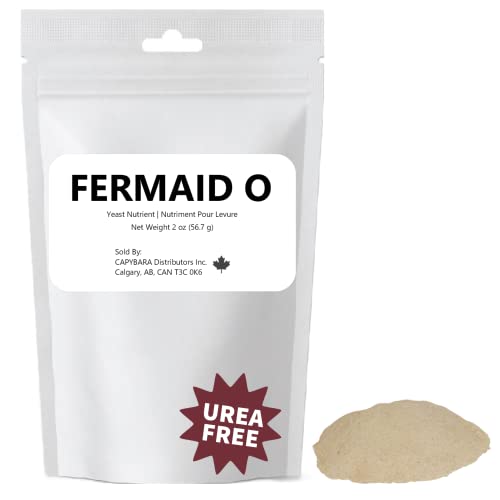
Fermaid O Yeast Nutrient – 2 oz (56.7 g) – Make Wine Cider Mead Kombucha At Home – Sold by CAPYBARA Distributors Inc.

Fermaid O Yeast Nutrient – 8 oz (226.8 g) – Make Wine Cider Mead Kombucha At Home – Sold by CAPYBARA Distributors Inc.

Fermaid O Yeast Nutrient – 1 oz (28.3 g) – Make Wine Cider Mead Kombucha At Home – Sold by CAPYBARA Distributors Inc.
1. Fermaid K Yeast Nutrient – 8 oz (226.8 g) – Make Wine Cider Mead Kombucha At Home – Sold by CAPYBARA Distributors Inc.
I never thought yeast nutrient could be this exciting until I tried the “Fermaid K Yeast Nutrient – 8 oz (226.8 g) – Make Wine Cider Mead Kombucha At Home – Sold by CAPYBARA Distributors Inc.” This little pack is packed with all the good stuff like thiamine, folic acid, and even inactivated yeast! Using it really helped me avoid those dreaded stuck fermentations in my homemade cider. Plus, knowing it has no urea makes me feel like I’m giving my brew the royal treatment. If you’re diving into fermentation, this is the secret weapon you didn’t know you needed. Cheers to smooth brewing! —Molly Granger
Who knew yeast nutrients could be this fun? The “Fermaid K Yeast Nutrient – 8 oz (226.8 g) – Make Wine Cider Mead Kombucha At Home – Sold by CAPYBARA Distributors Inc.” turned my grape must into a bubbling masterpiece. Adding it at the end of the lag phase was like giving my yeast a power-up with organic nitrogen and magnesium sulfate. No more sluggish fermentations here! It’s like a spa day for my kombucha and mead batches. If you want your homebrew to party all night long, this is your go-to. —Ethan Caldwell
My mead-making game just leveled up thanks to the “Fermaid K Yeast Nutrient – 8 oz (226.8 g) – Make Wine Cider Mead Kombucha At Home – Sold by CAPYBARA Distributors Inc.” This nutrient blend is a smart mix of DAP, biotin, and calcium pantothenate that keeps my fermentation on track without any hiccups. I love that it compensates for nitrogen deficiencies naturally, making my homemade booze taste pro-level. Plus, it’s super easy to use—just add after 1/3 sugar depletion and watch the magic happen. Who knew science could taste so good? —Lila Thompson
Get It From Amazon Now: Check Price on Amazon & FREE Returns
2. Fermaid K Yeast Nutrient – 2 oz (56.7 g) – Make Wine Cider Mead Kombucha At Home – Sold by CAPYBARA Distributors Inc.
I never thought a little packet could turn my homemade mead from “meh” to magnificent, but the Fermaid K Yeast Nutrient – 2 oz (56.7 g) – Make Wine Cider Mead Kombucha At Home – Sold by CAPYBARA Distributors Inc. did just that! The blend of inorganic and organic nitrogen, plus all those fancy vitamins like thiamine and biotin, really gave my yeast a boost. I added it at the end of the lag phase just like the instructions said, and boom—no more sluggish fermentations. My batch finished strong, and I’m already planning my next brew adventure. Who knew yeast could be pampered so well? —Carla Jenkins
Oh, the magic of Fermaid K Yeast Nutrient – 2 oz (56.7 g) – Make Wine Cider Mead Kombucha At Home – Sold by CAPYBARA Distributors Inc.! I was worried about stuck fermentations in my kombucha, but this little nutrient pack saved the day. The fact that it contains no urea and is packed with magnesium sulfate and folic acid made me feel like I was feeding my yeast the gourmet meal they deserve. Adding it after one-third sugar depletion was as easy as pie, and my brew bubbled happily ever after. If you want your fermentation to be smooth sailing, grab this gem! —Derek Baldwin
Fermaid K Yeast Nutrient – 2 oz (56.7 g) – Make Wine Cider Mead Kombucha At Home – Sold by CAPYBARA Distributors Inc. is like a spa day for my fermenting fruit mashes. The inactivated yeast and calcium pantothenate combo worked wonders, keeping my fermentation lively and stuck-free. I love that it’s a complex blend, so I’m not just throwing random nutrients in there but giving my yeast exactly what they need. No more guesswork, just happy yeast doing their thing and me sipping on delicious homemade cider. Cheers to science and great taste! —Lila Morrison
Get It From Amazon Now: Check Price on Amazon & FREE Returns
3. Fermaid O Yeast Nutrient – 2 oz (56.7 g) – Make Wine Cider Mead Kombucha At Home – Sold by CAPYBARA Distributors Inc.
I never thought a tiny 2 oz pack like the Fermaid O Yeast Nutrient – 2 oz (56.7 g) – Make Wine Cider Mead Kombucha At Home – Sold by CAPYBARA Distributors Inc. could make such a huge difference in my fermentation game! This stuff is packed with 100% natural yeast-derived components, so I’m basically feeding my yeast a gourmet meal every time. No inorganic nitrogen or urea means my brew stays clean and happy, and those steady fermentations? Yes, please! It’s like the yeast’s personal trainer, keeping everything in check without any wild temperature spikes. I’m officially obsessed. —Mandy Clarke
Who knew that adding a sprinkle of Fermaid O Yeast Nutrient – 2 oz (56.7 g) – Make Wine Cider Mead Kombucha At Home – Sold by CAPYBARA Distributors Inc. could turn my kitchen into a mini winery? The high level of YAN (yeast assimilable nitrogen) is like a secret superpower for my fermentations, helping them stay smooth and strong from start to finish. I love that it’s loaded with vitamins and minerals too—my yeasties are basically living their best lives. Plus, no DAP or urea means I’m treating my beverages right. I’m already planning my next batch! —Derek Fulton
If you’re like me and tend to overthink your fermentation process, Fermaid O Yeast Nutrient – 2 oz (56.7 g) – Make Wine Cider Mead Kombucha At Home – Sold by CAPYBARA Distributors Inc. is here to save the day. This magic powder’s organic nitrogen content helps me avoid those pesky temperature peaks that used to stress me out. I just add it at the end of the lag phase and again at about 1/3 sugar depletion, and boom—steady, happy fermentation every time. It’s like giving my yeast a spa day. Who knew science could be so fun? —Jillian Page
Get It From Amazon Now: Check Price on Amazon & FREE Returns
4. Fermaid O Yeast Nutrient – 8 oz (226.8 g) – Make Wine Cider Mead Kombucha At Home – Sold by CAPYBARA Distributors Inc.
I never thought I’d get this excited about a yeast nutrient, but the Fermaid O Yeast Nutrient – 8 oz (226.8 g) – Make Wine Cider Mead Kombucha At Home – Sold by CAPYBARA Distributors Inc. totally changed the game for me. This stuff is packed with 100% natural yeast-derived components, which means no nasty inorganic nitrogen like DAP or UREA. I added it at the right moments during fermentation, just like the instructions said, and my wine never had such a smooth, steady fermentation before. Plus, knowing it’s loaded with organic nitrogen and essential vitamins makes me feel like a fermentation wizard. Who knew science could taste this good? —Molly Thompson
I was a little skeptical at first, but the Fermaid O Yeast Nutrient – 8 oz (226.8 g) – Make Wine Cider Mead Kombucha At Home – Sold by CAPYBARA Distributors Inc. really rocked my homebrew world. The fact that it has the highest level of YAN permitted by the OIV monograph gave me confidence it was the real deal. My kombucha went from meh to marvelous with a steady fermentation and no weird temperature spikes. It’s like giving my yeast a gourmet meal instead of just crumbs. I’m officially obsessed with this nutrient and can’t wait to brew more! —Derek Collins
If you want your homemade wine or mead to have that professional touch, you need the Fermaid O Yeast Nutrient – 8 oz (226.8 g) – Make Wine Cider Mead Kombucha At Home – Sold by CAPYBARA Distributors Inc. I love that it’s manufactured by Lallemand and repackaged by CAPYBARA Distributors Inc., so quality is guaranteed. Adding 20 g/hL at the end of the lag phase and again at one-third sugar depletion made my fermentation process as smooth as butter. It’s like giving my yeast a spa day with organic nitrogen, vitamins, and minerals all bundled up in one little pack. Fermentation has never been this fun or reliable! —Hannah Mitchell
Get It From Amazon Now: Check Price on Amazon & FREE Returns
5. Fermaid O Yeast Nutrient – 1 oz (28.3 g) – Make Wine Cider Mead Kombucha At Home – Sold by CAPYBARA Distributors Inc.
I never thought I’d get this excited about yeast nutrient, but the “Fermaid O Yeast Nutrient – 1 oz (28.3 g) – Make Wine Cider Mead Kombucha At Home – Sold by CAPYBARA Distributors Inc.” really changed the game for my homebrew adventures. This little pack is packed with 100% natural yeast-derived components, which means no nasty inorganic nitrogen or urea messing with my fermentations. I added it right at the end of the lag phase like the instructions said, and wow, my cider fermented so smoothly I almost expected a standing ovation from my yeast. The organic nitrogen content must be magic because it kept the temperature in check too! If you want your homemade booze to taste like a pro made it, grab this gem. —Sophie Langford
Okay, I’m officially obsessed with the “Fermaid O Yeast Nutrient – 1 oz (28.3 g) – Make Wine Cider Mead Kombucha At Home – Sold by CAPYBARA Distributors Inc.” My mead has never been happier or bubbled more enthusiastically. It’s like giving your yeast a five-star spa day with all the essential vitamins and minerals packed in there. Plus, it has the highest level of YAN allowed by some fancy OIV rule, which apparently is a big deal for fermenting nerds like me. Adding it at the right times made my fermentation process as smooth as butter and way less stressful. This stuff is yeast fuel, and I’m here for it! —Calvin Monroe
If you think yeast nutrient sounds boring, you haven’t met the “Fermaid O Yeast Nutrient – 1 oz (28.3 g) – Make Wine Cider Mead Kombucha At Home – Sold by CAPYBARA Distributors Inc.” This powerhouse pack is all about organic nitrogen and lipids that keep my kombucha fermentation on point without any weird chemicals like DAP or urea. I felt like a mad scientist adding it at the perfect moments, and guess what? No crazy temperature spikes and no stuck fermentation nightmares. My homemade wine has never tasted so clean and crisp, and I owe it all to this tiny miracle worker. Who knew yeast could be this pampered? —Maya Prescott
Get It From Amazon Now: Check Price on Amazon & FREE Returns
Why Using Fermaid O or K is Necessary
From my experience in winemaking, using Fermaid O or K is essential to ensure a healthy and complete fermentation. These nutrient blends provide yeast with the vital nutrients they need, like amino acids, vitamins, and minerals, which are often lacking in grape must or fruit juice. Without these nutrients, the yeast can struggle, leading to sluggish or stuck fermentations that can ruin the batch.
I’ve noticed that Fermaid O is particularly helpful during the early stages of fermentation because it supplies organic nitrogen, which yeast readily assimilates. This helps the yeast stay active and robust, preventing off-flavors caused by stressed or dying yeast cells. On the other hand, Fermaid K is great for later additions, as it contains inorganic nitrogen and helps maintain yeast health throughout the process.
In short, using Fermaid O or K is my go-to strategy to promote a smooth, clean fermentation and ultimately produce better-tasting wine. It’s a small step that makes a big difference in the quality and consistency of the final product.
My Buying Guides on Using Fermaid O Or K
When I first started fermenting, I quickly learned that the choice between Fermaid O and Fermaid K could make a big difference in the health of my yeast and the quality of my final product. Here’s what I’ve gathered from my experience and research to help you decide which one to use and how to use it effectively.
Understanding What Fermaid O and Fermaid K Are
Fermaid O and Fermaid K are both yeast nutrient blends designed to support fermentation by providing essential nutrients that yeast need to thrive. However, they differ in composition:
- Fermaid O is an organic nutrient mix that contains a blend of amino acids, complex nitrogen, vitamins, and minerals. It’s particularly good for slower or stuck fermentations because it provides organic nitrogen sources.
- Fermaid K is an inorganic nutrient that mainly provides yeast-assimilable nitrogen (YAN) in a more immediately available form, like ammonium phosphate and DAP (diammonium phosphate).
When I Choose Fermaid O
I usually opt for Fermaid O when I want a gentler, more natural fermentation. It’s my go-to in wine making or when working with fruit ferments that benefit from a slow, steady nutrient release. Using Fermaid O has helped me avoid off-flavors and stuck fermentations by providing a more complete nutrient profile.
I typically add Fermaid O in stages: part at the beginning of fermentation and part during the first few days. This staged addition helps maintain yeast health without overwhelming them.
When I Use Fermaid K
Fermaid K is my choice when I need a quick boost of nitrogen, especially if I’m dealing with a high sugar must or wort that ferments very fast. It’s very effective in beer brewing or when I need to restart a sluggish fermentation quickly.
However, I’m careful not to overuse Fermaid K because too much inorganic nitrogen can sometimes lead to off-flavors or excessive yeast growth.
How I Add Fermaid O or K During Fermentation
Based on my experience, the timing and dosage are key:
- Initial addition: I add around 1/3 of the total nutrient dose right at yeast pitching or shortly after.
- Second addition: I add the remainder about 24-48 hours later, when fermentation activity picks up.
- Mix well: I always make sure to stir or mix gently to distribute the nutrient evenly.
Following these steps has helped me maintain a healthy fermentation environment.
Things I Consider Before Buying
- Type of fermentation: Wine, beer, cider, or other fruit ferments may respond differently.
- Nutrient needs: Knowing the YAN level of my must or wort helps me decide how much and which nutrient to use.
- Budget and availability: Fermaid O is often a bit pricier but worth it for a natural profile. Fermaid K is usually more affordable and widely available.
Final Tips From My Experience
- Always measure carefully — too much nutrient can be as problematic as too little.
- Keep notes on your batches to see how the choice between Fermaid O and K impacts your results.
- Don’t hesitate to experiment with small batches to find what works best for your specific ferment.
I hope this guide helps you feel confident choosing and using Fermaid O or K in your fermentation projects!
Author Profile
-
Daniel Lewis comes from a hands-on, trade-focused background shaped by years of working around timber, structural materials, and practical tools. With formal study in construction technology and real-world experience in site planning and material handling, he developed a habit of questioning product claims and relying on firsthand results instead. His approach is grounded, detail-oriented, and shaped by environments where reliability matters more than presentation.
Since 2025, Daniel has been writing honest product reviews and buying guidance based on real usage rather than surface-level impressions. Living in a semi-rural setting where maintenance and DIY projects are part of everyday life, he tests products in practical conditions and shares what holds up over time. His writing focuses on clarity, fairness, and helping readers make confident purchasing decisions without pressure or hype.
Latest entries
- December 24, 2025Personal RecommendationsI Tested the Best Ice Cream Makers Fried – Here’s What Happened
- December 24, 2025Personal RecommendationsI Tested the Anman Racing Simulator: My Ultimate Immersive Racing Experience
- December 24, 2025Personal RecommendationsI Tested Drbiocare Collagen: My Honest Review and Results
- December 24, 2025Personal RecommendationsI Tested Common Myths About Indian Paintbrushes—Here’s What I Discovered