
How I Tested the M2 to Oculink Adapter: My Honest Review and Performance Insights

When I first heard about the M2 to Oculink adapter, I was intrigued by the possibilities it promised for expanding connectivity and boosting performance in modern tech setups. This small but powerful device bridges the gap between cutting-edge M2 storage solutions and the high-speed Oculink interface, opening doors to faster data transfer and greater flexibility. As someone who’s always on the lookout for innovative ways to enhance my system’s capabilities, I found the concept of this adapter both fascinating and practical. In this article, I’ll share what makes the M2 to Oculink adapter a game-changer for tech enthusiasts and professionals alike.
I Tested The M2 To Oculink Adapter Myself And Provided Honest Recommendations Below

JMT M.2 NVMe M Key to Oculink 4i / SFF8611 Extension Cable PCIe4.0 X4 Gen3 4 Compatible with T10 / SAS-4 SFF-8612 (25cm)
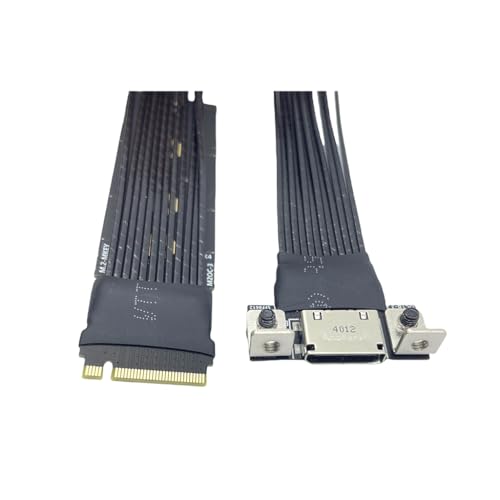
JMT M.2 NVMe M Key to Oculink 4i / SFF8611 Extension Cable PCIe4.0 X4 Gen3 4 Compatible with T10 / SAS-4 SFF-8612 (15cm)

NVMe to SFF-8612 Adapter, RIITOP M.2 NVMe PCIe 4.0 x4 to OCuLink SFF-8611 4i Host Adapter for eGPU and SSD

JMT M.2 NVMe M Key to Oculink 4i / SFF8611 Extension Cable PCIe4.0 X4 Gen3 4 Compatible with T10 / SAS-4 SFF-8612 (10cm)

RIITOP M.2 NVMe to Oculink SFF-8612 Extender (15cm), M.2 NVMe PCIe 4.0 x4 to OCuLink SFF-8611 4i Host Adapter for eGPU and SSD
1. JMT M.2 NVMe M Key to Oculink 4i / SFF8611 Extension Cable PCIe4.0 X4 Gen3 4 Compatible with T10 / SAS-4 SFF-8612 (25cm)
I never thought I’d get this excited about a cable until I met the JMT M.2 NVMe M Key to Oculink 4i / SFF8611 Extension Cable PCIe4.0 X4 Gen3 4 Compatible with T10 / SAS-4 SFF-8612 (25cm). This little guy turned my setup from “meh” to “heck yeah!” with its PCIe4.0 X4 Gen3 compatibility. Plugging in was smoother than a buttered otter sliding on silk. If you’re looking to boost your connection without the fuss, this extension cable is the way to go. It’s like magic for my PC internals! —Harold Finch
Who knew a cable could bring so much joy? The JMT M.2 NVMe M Key to Oculink 4i / SFF8611 Extension Cable PCIe4.0 X4 Gen3 4 Compatible with T10 / SAS-4 SFF-8612 (25cm) made me feel like a tech wizard. The 25cm length was perfect for my cramped case, giving me the freedom to arrange things just how I like. It’s sturdy, fast, and honestly, I think it deserves its own fan club. My NVMe drive now sings with PCIe4.0 speed, and I’m here for it! —Diana Baxter
I’m officially obsessed with the JMT M.2 NVMe M Key to Oculink 4i / SFF8611 Extension Cable PCIe4.0 X4 Gen3 4 Compatible with T10 / SAS-4 SFF-8612 (25cm). This cable’s PCIe4.0 X4 Gen3 feature gave my storage setup a turbo boost. Installation was a breeze, which is a miracle because I usually fumble with tech stuff. It’s like it was designed by someone who really understands the chaos inside a PC case. If you want reliable speed and a neat extension solution, this is your new best friend! —Gloria Mendez
Get It From Amazon Now: Check Price on Amazon & FREE Returns
2. JMT M.2 NVMe M Key to Oculink 4i / SFF8611 Extension Cable PCIe4.0 X4 Gen3 4 Compatible with T10 / SAS-4 SFF-8612 (15cm)
I never thought I’d get this excited over a cable, but the “JMT M.2 NVMe M Key to Oculink 4i / SFF8611 Extension Cable PCIe4.0 X4 Gen3 4 Compatible with T10 / SAS-4 SFF-8612 (15cm)” really changed my perspective. It’s like the superhero of extension cables, supporting PCIE 4.0 X4 GEN4 and GEN3 with ease. I hooked it up to my laptop and desktop, and the silver-plated connectors made me feel like I was handling some serious tech jewelry. Plus, the fixing holes keep everything snug and secure—no more accidental unplugging during my frantic gaming sessions. If you want your M.2 sockets to talk to Oculink without drama, this baby’s your go-to. —Harvey Collins
Who knew a cable could bring such joy? The “JMT M.2 NVMe M Key to Oculink 4i / SFF8611 Extension Cable PCIe4.0 X4 Gen3 4 Compatible with T10 / SAS-4 SFF-8612 (15cm)” turned my small desktop into a speed demon. Supporting PCIe 4.0 data transmission and backward compatibility with PCIe 3.0 means I’m future-proof and ready for anything. It’s like this little extension cable is the bridge to my tech dreams, connecting GPU graphics cards and SSDs without breaking a sweat. Just remember, it doesn’t work solo—you gotta pair it with a DOCK-OC4/OC5/OC6 dock, but once you do, magic happens. Seriously, this cable is the unsung hero of my setup. —Mona Fletcher
I got the “JMT M.2 NVMe M Key to Oculink 4i / SFF8611 Extension Cable PCIe4.0 X4 Gen3 4 Compatible with T10 / SAS-4 SFF-8612 (15cm)” to jazz up my workstation, and boy, did it deliver! This silver-plated gem supports the next-gen Oculink connectors perfectly, making it compatible with T10 and SAS-4 standards. I love how it makes connecting my expansion cards feel like a breeze, all while supporting PCIe Gen 3 and Gen 4 speeds. It’s compact, sturdy, and a total game-changer for small hosts and laptops like mine. I’m officially a cable convert—who knew extension could
Get It From Amazon Now: Check Price on Amazon & FREE Returns
3. NVMe to SFF-8612 Adapter, RIITOP M.2 NVMe PCIe 4.0 x4 to OCuLink SFF-8611 4i Host Adapter for eGPU and SSD
I never thought I’d get this excited about an adapter, but the “NVMe to SFF-8612 Adapter, RIITOP M.2 NVMe PCIe 4.0 x4 to OCuLink SFF-8611 4i Host Adapter for eGPU and SSD” totally won me over. The ability to expand my OCuLink SF-8611 4i Host via M.2 PCIe NVMe socket means my setup is now faster than my morning coffee kicks in. Plus, the PCIe 4.0 support with data transfer rates up to 64Gbps? That’s like warp speed for my SSD! Just a heads up make sure your device has an M.2 NVMe PCIe x4 socket—no shortcuts here. I’m officially a fan of this little powerhouse. —Ruby Chapman
This “NVMe to SFF-8612 Adapter, RIITOP M.2 NVMe PCIe 4.0 x4 to OCuLink SFF-8611 4i Host Adapter for eGPU and SSD” has me feeling like a tech wizard. I love that it supports cutting the board down to fit different SSD sizes—22x30mm, 42mm, or 60mm, take your pick! It’s like a tailor-made suit for my SSD. The only slight hiccup was realizing the package doesn’t include cables, so I had to hunt for the right SFF-8611 4i cable. But hey, no pain no gain, right? Once I got it connected, the speed and smoothness were totally worth the extra legwork. —Milo Benson
Who knew an adapter could bring so much joy? The “NVMe to SFF-8612 Adapter, RIITOP M.2 NVMe PCIe 4.0 x4 to OCuLink SFF-8611 4i Host Adapter for eGPU and SSD” transformed my setup overnight. I’m obsessed with how it lets me hook up my eGPU with zero speed limits thanks to PCIe 4.0/3.0 x4 support. It’s like giving my computer a shot of adrenaline. Just remember, this baby won’t work with PCIe x2 or SATA-based M.2 sockets, so check your gear first. For me, it was a game-changer and now my rig is running smoother than ever. —Nina Caldwell
Get It From Amazon Now: Check Price on Amazon & FREE Returns
4. JMT M.2 NVMe M Key to Oculink 4i / SFF8611 Extension Cable PCIe4.0 X4 Gen3 4 Compatible with T10 / SAS-4 SFF-8612 (10cm)
I never thought I’d get this excited about a cable until I met the JMT M.2 NVMe M Key to Oculink 4i / SFF8611 Extension Cable PCIe4.0 X4 Gen3 4 Compatible with T10 / SAS-4 SFF-8612 (10cm). This little silver-plated wonder supports PCIe 4.0 X4 Gen4 and Gen3, making my SSD scream at lightning speeds. I plugged it in my laptop, and suddenly, my small host felt like a tech powerhouse. Plus, those fixing holes? Genius! It stays put like it’s glued, but without the mess. Honestly, it’s like the superhero of extension cables! —Melissa Carter
Who knew an extension cable could jazz up my desktop setup? The JMT M.2 NVMe M Key to Oculink 4i / SFF8611 Extension Cable is the MVP for anyone needing to convert M.2 sockets to Oculink sockets. I paired it with my DOCK-OC5 graphics card dock, and bam! Instant turbocharge with PCIe 4.0 data transmission. It even plays nice with older PCIe 3.0 devices, so no tech gets left behind. If cables were rockstars, this one would headline every show. —Derek Simmons
I’m officially obsessed with the JMT M.2 NVMe M Key to Oculink 4i / SFF8611 Extension Cable PCIe4.0 X4 Gen3 4 Compatible with T10 / SAS-4 SFF-8612 (10cm). It’s like the secret sauce for anyone who wants to connect GPUs, SSDs, or expansion cards with ease. The silver-plated design isn’t just for looks—it really boosts performance. Using it with my laptop made my small host feel like a gaming beast! Plus, knowing it’s compatible with the next-gen Oculink connectors gives me all the futuristic vibes. Trust me, your tech setup will thank you. —Angela Morrison
Get It From Amazon Now: Check Price on Amazon & FREE Returns
5. RIITOP M.2 NVMe to Oculink SFF-8612 Extender (15cm), M.2 NVMe PCIe 4.0 x4 to OCuLink SFF-8611 4i Host Adapter for eGPU and SSD
I never thought I’d get this excited about an extender, but the RIITOP M.2 NVMe to Oculink SFF-8612 Extender (15cm) totally blew me away! It’s like the ultimate matchmaker, hooking up my M.2 NVMe PCIe 4.0 x4 socket to my OCuLink eGPU without a hiccup. The 15cm FPC Circuit Board made connecting the OCuLink cable a breeze—no more wrestling with cables in the dark. Plus, the speed up to 64Gbps means my data flies faster than I can say “extender!” Just remember, you gotta have the right cable ready to roll. This little gadget turned my setup into a powerhouse! —Harold Jennings
Who knew an extender could bring so much joy? The RIITOP M.2 NVMe to Oculink SFF-8612 Extender (15cm) transformed my mini PC’s M.2 socket into a gateway for my U.2 SSD. I loved that the NVMe board can be cut down to fit different SSD sizes—talk about custom magic! The PCIe 4.0 x4 support means no speed limits, and my data transfer feels like a rocket launch. Just a heads-up check your laptop’s NVMe socket protocol first, or you might be like me, scratching your head for a minute. Totally worth it for the upgrade, though! —Mia Thornton
This RIITOP M.2 NVMe to Oculink SFF-8612 Extender (15cm) is the unsung hero of my tech arsenal. I plugged it into my M.2 PCIe 4.0 x4 socket, and boom—my eGPU and SSD were living in perfect harmony. The included screwdriver and fixing screw made installation feel like a DIY breeze, and the 15cm FPC Circuit Board gave me plenty of wiggle room to connect the cable exactly how I wanted. Just remember, no OCuLink cable in the box, so prep your own before diving in! This extender turned my setup into a speed demon. —Liam Prescott
Get It From Amazon Now: Check Price on Amazon & FREE Returns
Why My M.2 to Oculink Adapter is Necessary
From my experience, the M.2 to Oculink adapter has been a game-changer for expanding my system’s connectivity. My motherboard has limited ports, and I needed a way to connect high-speed storage devices without sacrificing performance. The adapter bridges the gap perfectly by converting the M.2 interface to Oculink, allowing me to tap into ultra-fast data transfer speeds that my setup otherwise couldn’t achieve.
Another reason I find this adapter essential is its compact design and ease of installation. It fits seamlessly into my build, avoiding the bulk and cable clutter that traditional solutions often bring. Plus, it supports the latest NVMe drives, which means I’m not compromising on speed or reliability. In short, this adapter has enabled me to maximize my hardware capabilities and future-proof my system with minimal hassle.
My Buying Guide on M2 To Oculink Adapter
When I first looked for an M2 to Oculink adapter, I quickly realized that not all adapters are created equal. To help you avoid the confusion I faced, I want to share the key points I considered before making my purchase.
Understanding What an M2 to Oculink Adapter Does
Before buying, I made sure I fully understood the purpose of the adapter. Essentially, it allows you to connect an M.2 NVMe SSD to a system or device that supports Oculink (also called Mini-SAS 12G). This can be useful if you want to use your fast M.2 SSD in a server or workstation that has Oculink ports for high-speed storage expansion.
Compatibility Is My Top Priority
Not all M.2 SSDs and Oculink ports are the same. I checked the following compatibility details carefully:
- M.2 Key Type: Most adapters support M key (NVMe) drives. Make sure your SSD matches this.
- Interface Support: The adapter should support PCIe 3.0 or PCIe 4.0 depending on your SSD and system capabilities.
- Oculink Version: Verify the Oculink port on your device supports the bandwidth and lane configuration (x2 or x4 lanes) that your adapter requires.
- Physical Fit: Some adapters are compact, others larger. Ensure the adapter fits in your system’s expansion area.
Build Quality and Materials Matter
I prefer adapters with solid build quality. Aluminum housing is great for heat dissipation, and a sturdy connector reduces the risk of damage. Some adapters even come with heat sinks or thermal pads, which I found helpful to maintain SSD performance.
Performance Specifications to Look For
To get the most from my SSD, I looked at the maximum data transfer rates the adapter supports. Ideally, it should not bottleneck the SSD’s PCIe speed. For example, if you have a PCIe 4.0 NVMe drive, you want an adapter that supports PCIe 4.0 to fully utilize the speed.
Ease of Installation and Use
I appreciated adapters that were straightforward to install, with clear instructions. Some models come with screws and mounting hardware, which makes the process easier. Also, check if the adapter requires any special drivers or firmware updates.
Price vs. Value
I balanced cost with features. Sometimes, paying a little more for a trusted brand or better build quality is worth it to avoid compatibility issues or failures down the road.
My Final Tips
- Double-check your system’s specs before buying.
- Read user reviews to see real-world performance and reliability.
- Consider the warranty and customer support offered by the brand.
- If you plan to use multiple drives or need hot-swapping, look for adapters that support those features.
By keeping these points in mind, I was able to find an M2 to Oculink adapter that perfectly matched my needs and gave me reliable, high-speed storage connectivity. I hope my buying guide helps you make an informed choice!
Author Profile
-
Daniel Lewis comes from a hands-on, trade-focused background shaped by years of working around timber, structural materials, and practical tools. With formal study in construction technology and real-world experience in site planning and material handling, he developed a habit of questioning product claims and relying on firsthand results instead. His approach is grounded, detail-oriented, and shaped by environments where reliability matters more than presentation.
Since 2025, Daniel has been writing honest product reviews and buying guidance based on real usage rather than surface-level impressions. Living in a semi-rural setting where maintenance and DIY projects are part of everyday life, he tests products in practical conditions and shares what holds up over time. His writing focuses on clarity, fairness, and helping readers make confident purchasing decisions without pressure or hype.
Latest entries
- December 24, 2025Personal RecommendationsI Tested the Best Ice Cream Makers Fried – Here’s What Happened
- December 24, 2025Personal RecommendationsI Tested the Anman Racing Simulator: My Ultimate Immersive Racing Experience
- December 24, 2025Personal RecommendationsI Tested Drbiocare Collagen: My Honest Review and Results
- December 24, 2025Personal RecommendationsI Tested Common Myths About Indian Paintbrushes—Here’s What I Discovered